Bathrooms and laundry rooms
One-piece sheet vinyl with few seams keeps water out better than seamed flooring, which suits wet rooms and utility spaces.
Flooring Service
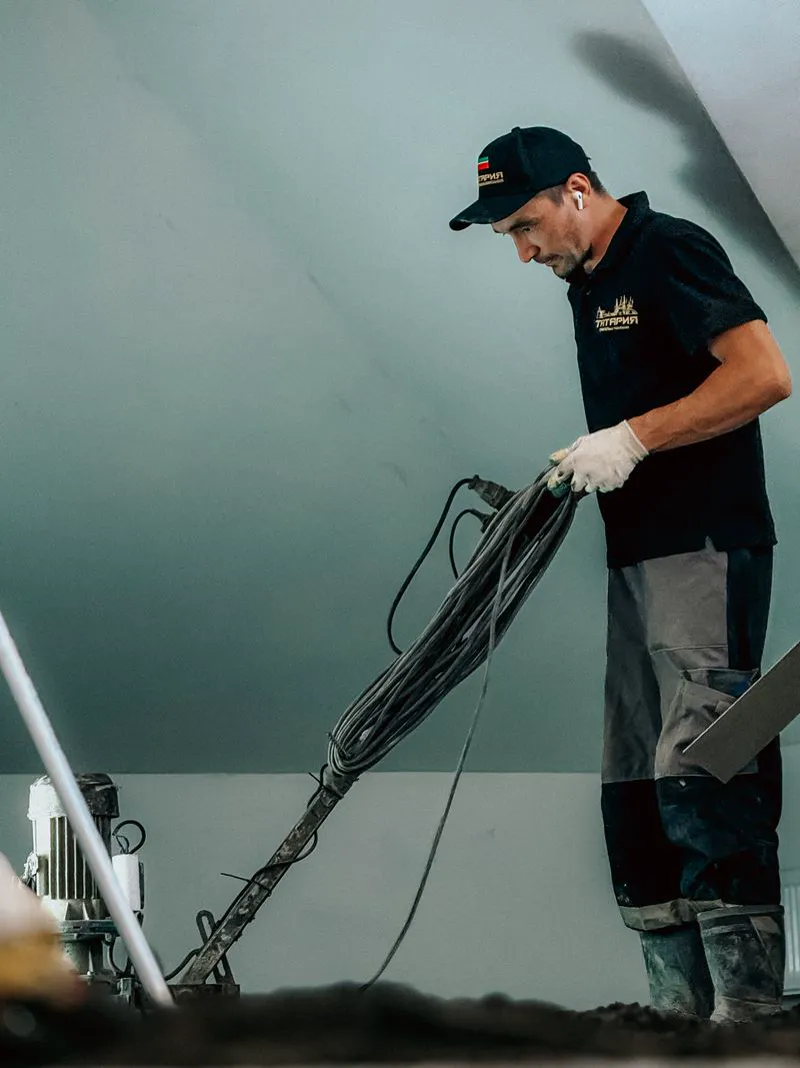
Sheet vinyl and vinyl composition tile (VCT) are the workhorse floors of residential and light-commercial spaces. Sheet vinyl installs in wide, continuous rolls that keep water out, while VCT — the square tiles common in retail and institutional floors — is durable and easy to replace tile by tile.
This page explains what goes into a sheet vinyl or VCT installation in a Madison-area property, why subfloor prep matters so much for these glue-down floors, and what a clear written estimate should include. Each project is quoted individually around its actual scope.
Budgeting your project? See typical vinyl flooring costs (2026) from the national cost guide at CalculateFlooring.com.
Because both sheet vinyl and VCT are glued directly to the subfloor, the surface underneath drives the job. A project-specific written estimate accounts for factors like these:
Your written estimate breaks out labor, prep, trim, and removal around the actual scope of your vinyl project.
One-piece sheet vinyl with few seams keeps water out better than seamed flooring, which suits wet rooms and utility spaces.
Sheet vinyl's continuous surface resists spills at the sink and stove and is gentle underfoot.
Affordable, replaceable sheet vinyl and VCT are common in rental units and turnover refreshes.
VCT is the standard durable, easy-to-maintain floor for retail, office, and small commercial spaces.
Glue-down sheet vinyl over a dry, prepped slab is a low-profile option for finished basement space.
Sheet vinyl and VCT are thin and glue-down, so they reproduce every flaw in the floor beneath them. A smooth, flat subfloor is non-negotiable. Over wood, that often means installing a new layer of plywood underlayment, fastened and prepped so fastener heads and seams do not show through. Over concrete, the slab must be flat, clean, dry, and free of old adhesive, paint, or curing compounds that would break the adhesive bond.
Seam placement is a real skill with sheet vinyl. A good installer plans where seams fall so they are away from high-traffic sightlines and staggered so they are less visible, then heat-welds or chemically bonds them depending on the product. Tear-out of existing flooring — including the old adhesive layer — is assessed and quoted separately, because residual adhesive can interfere with the new glue-down.
The space is measured, the subfloor is assessed, and the product, pattern, and seam plan are set.
You receive an itemized quote covering prep, adhesive, seaming, trim, and any tear-out.
Subfloor flattening or underlayment, then adhesive, layout, seaming, or setting.
Transition edging and base, debris hauled away, and a final walkthrough of the floor.
Timeline to expect: most single rooms are a one-day install. Whole homes run several days, and tear-out or subfloor prep adds time. The day count belongs on your written estimate before work begins.
Warranty:ask for a written workmanship warranty, separate from the manufacturer’s material warranty. Get what each covers and for how long on paper before you sign.
Sheet vinyl comes in wide, continuous rolls and installs as one continuous sheet with minimal seams, ideal where keeping water out matters. VCT (vinyl composition tile) is square tiles set in adhesive in a grid; it is durable, budget-friendly, and individual tiles can be replaced, which is why it is common in retail and commercial floors.
Sheet vinyl and VCT are thin and glued directly to the substrate, so they show every imperfection underneath. A ridge, a fastener head, or a crack in the subfloor telegraphs through the finished floor. That is why flattening, skimcoat, or a new underlayment is often the most important part of the job.
Sometimes. Sheet vinyl can be installed over a smooth, well-adhered, hard surface like existing sheet vinyl or ceramic tile, provided it is flat and properly prepped. Cushioned vinyl, loose flooring, and damaged subfloors must come out first. The decision depends on what is down there and its condition.
With a skilled installer and the right product, seams can be made very hard to see by staggering placement, matching pattern, and heat-welding or chemically bonding the seam. Seams are more visible with lighter patterns and where traffic crosses them, so seam location is planned during the estimate.
The vinyl itself is waterproof, and a properly seamed sheet-vinyl floor keeps most surface water from reaching the subfloor. That said, standing water can still find the edges, seams, and transitions, so waterproof is not the same as flood-proof. Good prep and seam work are what protect the floor below.
VCT is porous by design and is normally finished with floor polish (often several coats) that protects the tile and gives it its shine. The polish wears in traffic areas and needs periodic recoating and stripping to keep the floor looking good. This is standard maintenance for VCT, not a defect.
A room or two is typically a one-day install once prep is done. Subfloor patching, new underlayment, or tear-out adds time, and adhesive needs curing time before heavy traffic. The estimate includes the timeline.
In kitchens and laundry rooms, appliances usually need to move. Whether that is included or a listed line item should be stated on the written estimate, along with who resets toilets or connections if plumbing is involved.
Call (256) 415-7610 or submit a request through the estimate form. The estimate includes measuring, a subfloor check, product options, and a written, itemized quote with no obligation.
Call directly or send a quick request for a free, written, project-specific estimate serving Madison and North Alabama.
Free, written, project-specific estimate. No obligation.